Operation Flounced: Bolton’s Gunners and the Raid That Captured “Mad Jack” Churchill
In the opening days of June 1944, the 111th (Bolton) Field Regiment took its guns across the Adriatic to the German-held island of Brač. Alongside commandos and Yugoslav Partisans, the regiment joined Operation Flounced: a raid intended to strike the enemy and draw German forces away from fighting on the mainland.
The urgency came from events around Drvar, where the Germans had launched Operation Rösselsprung against Tito and his headquarters. By threatening Brač, the Allies hoped to keep German troops occupied along the coast and potentially draw reserves towards it. The island’s strongest defences lay around Nerežišća and, farther east, Selca and Sumartin. Operation Flounced: background and objectives
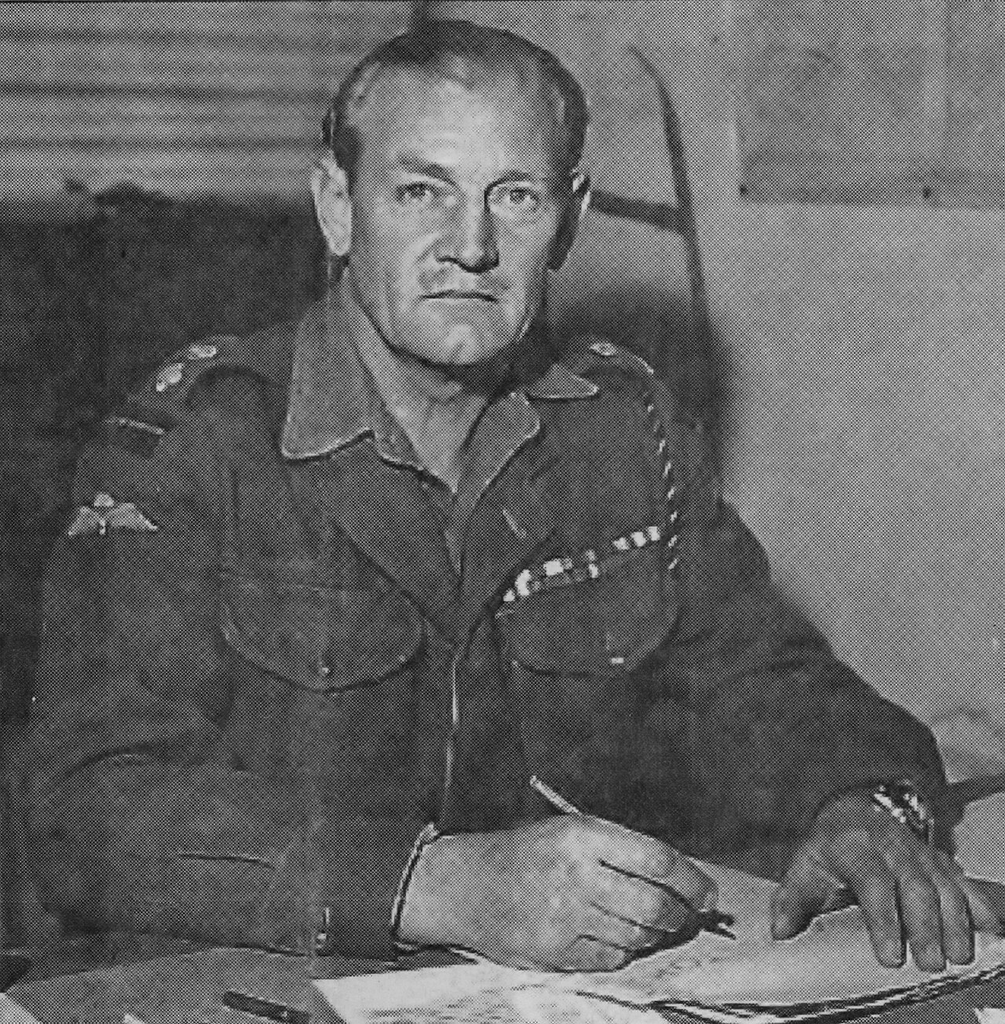
The force’s commander was Lieutenant-Colonel John Malcolm Thorpe Fleming Churchill, widely remembered as “Mad Jack”. Already an experienced commando officer, he had fought in Norway and Italy and acquired a reputation for carrying a sword and taking his bagpipes into action. His eccentric appearance accompanied a deliberate approach to leadership: he believed a commander’s personal example could unsettle the enemy and convince his own men that difficult things were possible.

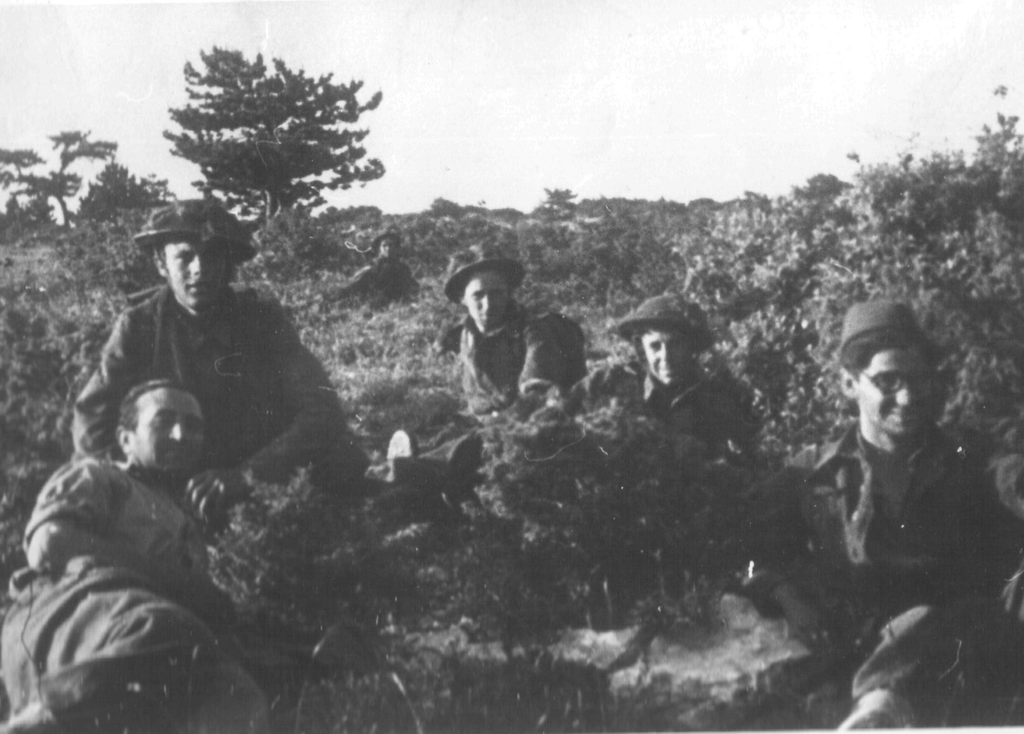
For the Bolton artillerymen, the operation began before the main force embarked. Captain J. L. Hart left Vis on the evening of 31 May as a forward observation officer with a detachment of the 2nd Battalion, Highland Light Infantry. His task was to help connect the troops fighting inland with the guns supporting them.
On 1 June, 211 Battery loaded its guns and vehicles, followed by its personnel. The regimental diary records the main landings at Bol and Farska at 01:00 on 2 June. That evening, two additional 25-pounders from 212 Battery, under Lieutenants L. T. Filleul and H. J. Reay, embarked for Brač. They landed at Farska the following morning.
Once ashore, the gun crews faced a punishing workload. The artillery report records approximately 6,000 rounds—about 100 tons of ammunition—carried by hand. Men moved ammunition between periods of serving their guns, leaving little opportunity to rest. Enemy shelling damaged equipment, although the report records no personnel casualties from the shelling of the gun positions.
The difficulty was also one of communication. During the evening of 2 June, radio interference prevented a revised fire programme from reaching the guns. Artillery support depended on messages passing between observers, headquarters and dispersed batteries; delays could disrupt the timing of an attack.
Inland, the attackers encountered mines, wire and prepared positions. An attempt by the Highland Light Infantry to take the German observation post on the heights was checked, while 43 Royal Marine Commando also met a minefield in its advance against Point 542. Partisan assaults faced the same difficult combination of obstacles and defensive fire. Aircraft were called in, and the observation post was eventually captured. Progress required repeated attacks and cooperation between infantry, artillery and air support.
Individual acts of courage helped men through those defences. Marine Charles Nicholls of 43 Commando went forward to help blast a passage through wire and mines under heavy fire. Although badly wounded, he returned to bring his troop through. Standing in the moonlight, he made himself visible so that others could find the gap, then continued with them. His actions earned the Military Medal. Nicholls’s award recommendation
The fighting reached a critical point on the night of 3 June. The artillery report records supporting fire beginning at 20:30. At 22:00, two flares signalled success from Point 622. Thirty minutes later, a message reported that German troops had counter-attacked and forced the attackers back. Royal Artillery report, pp. 6–7
Among those caught in the fighting was Lieutenant Jeff Beadle, the 21-year-old commander of Y Troop, 40 Royal Marine Commando. A later account describes his Marines advancing with fixed bayonets, accompanied by Churchill’s pipes. Beadle helped a small party hold on against the German counter-attack, firing a captured submachine gun until its ammunition ran out. An explosion badly wounded him; he survived and was taken prisoner.
Churchill’s own capture became one of the most remarkable episodes of the raid. In his account of Churchill’s life, his friend Rex King-Clark describes him on the summit with a small group of Royal Marines as the attack broke down under machine-gun and mortar fire. Lieutenant-Colonel J. C. “Pops” Manners, commanding 40 Commando, was killed.
King-Clark recounts that Churchill played Will Ye No Come Back Again? on his bagpipes before being stunned by grenades and captured. The image is extraordinary, but it belongs within the desperate circumstances of the action: men isolated on an enemy position, suffering casualties, with their attack losing momentum.
By the morning of 4 June, both Churchill and Manners were reported missing. Lieutenant-Colonel R. W. B. Simmonds assumed command and ordered evacuation following the heavy losses. Men of No. 2 Commando arriving that morning learned how sharply the situation had changed. Major R. W. Keep later obtained permission to remain with Lieutenant M. H. Webb and twelve volunteers in an unsuccessful effort to rescue Churchill.
For the artillerymen, covering the departure was another fighting task. Batteries were withdrawn in stages while other guns continued firing. The 25-pounders at Farska and the Partisan battery maintained fire into the afternoon as the evacuation proceeded.
At 23:00 on 4 June, the 111th’s diary recorded that all its personnel had returned from the operation. For Churchill and the other prisoners, a much longer journey was beginning.
Churchill was eventually imprisoned at Sachsenhausen. His own later account describes escaping through a tunnel with RAF officer Squadron Leader Jimmy James in 1944. They reached Rostock on the Baltic after fifteen days, only to be caught and returned to the camp.
After recapture, Churchill endured confinement in the camp’s prison, including a month handcuffed and chained to the floor. He was subsequently moved through Dachau and to a camp near the Brenner Pass. There he escaped again, finally reaching American troops near Trento. These events are recorded in his own recollection of a return visit to Sachsenhausen in 1975.
Operation Flounced should be judged against its purpose as a raid. Leaving Brač was expected; the costly fighting and the failure to overcome key defences shaped when and how the force departed. Equally, its wider intention to relieve pressure on the Partisans should be distinguished from what can be demonstrated about its results.
For the Bolton gunners, the surviving record preserves a demanding operation: guns landed on unfamiliar beaches, ammunition carried by exhausted men, fire coordinated across difficult ground, and support maintained during evacuation. Churchill’s capture gives Flounced its most famous episode. The regiment’s diary shows the sustained work that supported the raid—and helped bring its men home.
Read the June 1944 war diary and the attached Operation Flounced report.